
Build, Understand & Share Engineering Models Faster than Simulink Alternatives
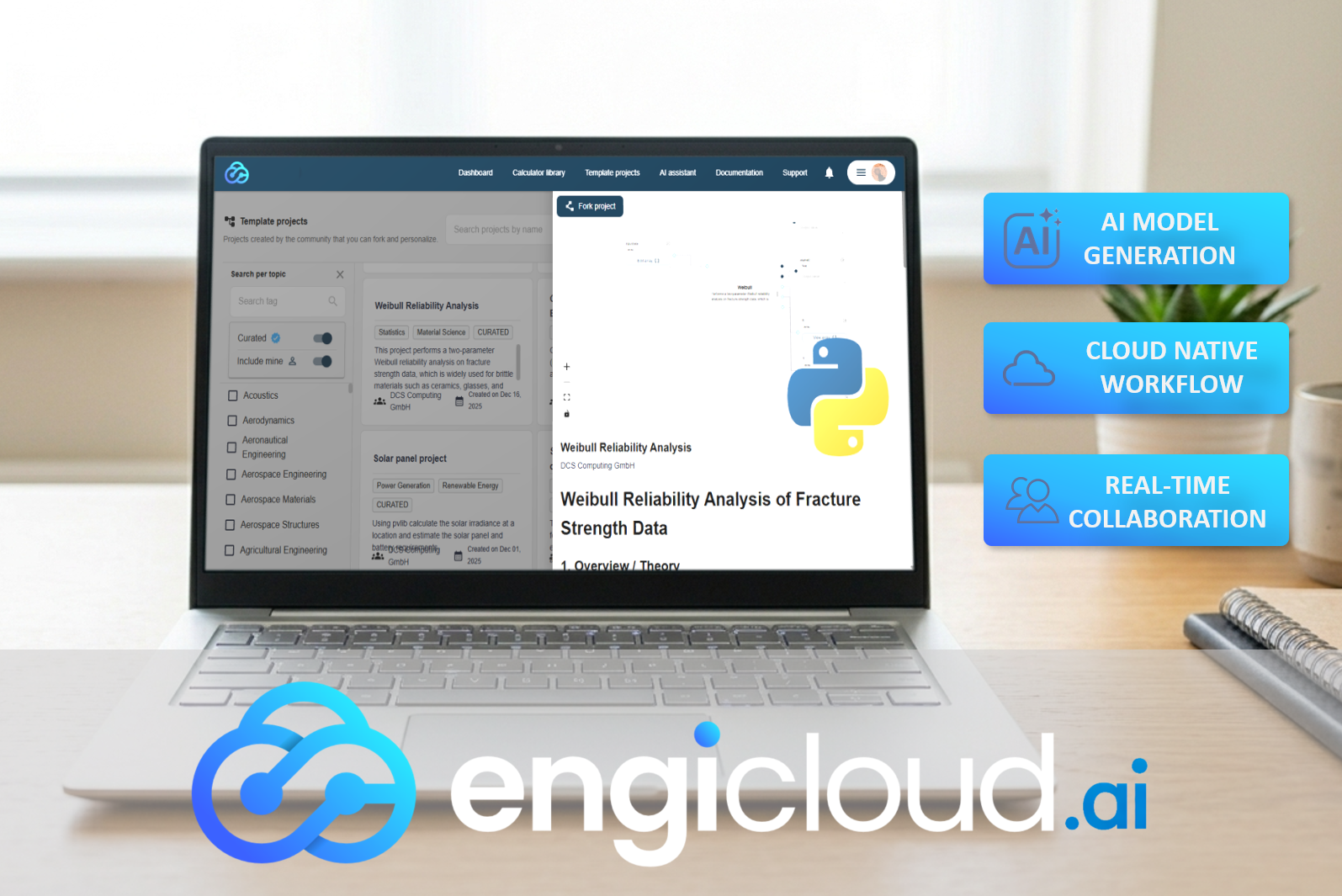
Build, Understand, and Share Engineering Models Faster Than Traditional Modeling Tools
Engineering teams today are under pressure to move faster. They need to build models quickly, understand them clearly, share them easily, and adapt them as projects evolve. That is true whether you are working in research, product development, consulting, or teaching.
For many years, tools like Simulink have helped engineers model dynamic systems in a structured way. But the expectations around engineering software have changed. Modern users increasingly want cloud collaboration, Python interoperability, AI assistance, lower barriers to entry, and more flexible ways to turn technical knowledge into executable models.
This is where engicloud.ai comes in.
engicloud.ai is a modern, cloud-based modeling platform powered by AI and Python. It is designed to help scientists, engineers, and research teams build, understand, and share models much more efficiently than with traditional desktop-first workflows.
Why More Engineers Are Looking for a Simulink Alternative
Simulink remains an important and respected tool. It has been trusted for decades and still plays a major role in many industries. But many of today’s engineering workflows now require capabilities that go beyond what older modeling environments were originally designed for.
Users increasingly look for alternatives because they want:
- cloud-based collaboration
- faster model creation
- AI support for repetitive work
- better compatibility with Python-based workflows
- more affordable access
- a more modern and intuitive user experience
These are not just convenience features. They directly affect how quickly teams can move, how easily they can onboard new people, and how well engineering knowledge can be reused over time.
A New Approach to Engineering Modeling
engicloud.ai is not just another simulation tool. It is built around the idea that engineering knowledge should be easier to transform into something executable, reusable, understandable, and shareable.
Instead of relying only on manual setup and static workflows, engicloud.ai combines:
- AI-assisted model generation
- cloud-native collaboration
- Python-first flexibility
- reusable modeling apps and templates
- a more accessible entry point for individuals and teams
That makes it especially relevant for modern technical environments where engineers often work across notebooks, scripts, APIs, cloud infrastructure, and collaborative research or development workflows.
1. AI Can Help Build Models Faster
One of the biggest differences between engicloud.ai and more traditional tools is the role of AI.
In many modeling environments, users begin from a blank workspace and build their models manually from the ground up. That can be powerful, but it also takes time and experience.
engicloud.ai uses large language models to assist with technical model creation. Depending on the workflow, this can help users:
- generate equations
- create model structures
- propose workflows
- turn technical knowledge into executable apps
- reduce repetitive setup effort
The value here is not just speed for the sake of speed. It is about helping engineers get to a usable starting point faster, so they can spend more time validating assumptions, refining models, and interpreting results.
For many teams, that can dramatically accelerate the path from idea to executable model.
2. Collaboration Is Built In
Engineering work is rarely done in isolation. Models need to be reviewed, reused, explained, adapted, and shared across teams.
Traditional modeling workflows are often still shaped by local files, desktop installations, and more fragmented collaboration practices. That can make sharing harder than it should be, especially for distributed teams.
engicloud.ai takes a cloud-first approach. This makes it easier to:
- share a model through a link
- collaborate with others more directly
- keep work versioned and traceable
- make models available across teams or organizations
This is especially valuable when engineering models are not just personal assets, but part of a broader knowledge base that should remain usable over time.
3. Python-First and Open by Design
Modern engineering increasingly depends on open tools and flexible workflows. Python has become central in many technical domains because it connects modeling, automation, data analysis, scientific computing, and machine learning in one ecosystem.
engicloud.ai is designed to fit naturally into that reality.
Rather than forcing users into a closed proprietary stack, it supports workflows that connect with:
- Python scripts
- Jupyter-style work
- APIs
- scientific libraries
- modern cloud-based workflows
That openness matters for researchers, scientists, startups, and technical teams that want to move fluidly between modeling, analysis, and deployment.
4. Reusable Apps and Ready-to-Use Templates
Another challenge in engineering is that too much valuable work gets buried in scattered scripts, old notebooks, and undocumented files. Even when a model exists, it may still be difficult for someone else to find, understand, or run it.
engicloud.ai addresses this by making it easier to work with reusable assets such as:
- ready-to-use apps
- community-created models
- AI-generated templates
- curated workflows
- domain-specific building blocks
This can significantly reduce the time needed to get started and makes it easier for users to learn from and build on existing work.
For students and educators, this can reduce the friction of learning. For research and development teams, it can help turn one-off work into reusable organizational knowledge.
5. More Accessible Pricing and Lower Entry Barriers
Pricing and access also play an important role in tool adoption.
Traditional modeling environments can become expensive, especially when multiple proprietary modules or toolboxes are required. That can make experimentation harder for smaller teams, researchers, consultants, and independent engineers.
A more flexible pricing structure makes it easier to try a platform, learn it, and grow with it over time.
This matters because the best technical tool is not always the one with the longest legacy. Often, it is the one that a team can actually adopt, use, and scale without unnecessary friction.
Who engicloud.ai Is Especially Well Suited For
engicloud.ai can be a strong fit for a wide range of users, including:
- scientists
- engineers across mechanical, chemical, fluid, materials, and systems domains
- students and educators
- R&D teams
- startups
- research groups
- teams already working in Python-centered environments
It is especially attractive for users who care about speed, openness, collaboration, and AI-assisted workflows.
At the same time, there are use cases where traditional tools may still remain the better fit, especially where highly specific legacy processes or safety-critical proprietary ecosystems are already deeply embedded.
A fair comparison should acknowledge that.
Moving Beyond Legacy Workflows
Many teams do not actually want to replace everything overnight. They simply want a better way to bring their equations, logic, and documentation into a more modern environment.
That is why migration matters.
A modern platform should not only help users create new models. It should also help them reconstruct, understand, and improve existing workflows. This is particularly important when teams are trying to move from isolated desktop work toward more collaborative, reproducible, and cloud-based engineering practices.
The Bigger Opportunity
The real opportunity is not only to model faster. It is to make engineering knowledge more useful.
When models become easier to generate, interpret, share, and reuse, teams can reduce duplication, onboard people more quickly, and preserve valuable technical work that would otherwise remain trapped in disconnected files and individual know-how.
That is where engicloud.ai offers something genuinely different.
It reflects the reality that engineering is no longer just about building one model on one machine. It is about creating a workflow in which knowledge becomes executable and remains valuable across time, teams, and projects.
Final Thoughts
Simulink has earned its place in engineering history, and it continues to be relevant in many environments. But many of today’s engineers are looking for something that fits better with modern workflows: something more open, more collaborative, more accessible, and more intelligent.
engicloud.ai is built for that direction.
For teams that want to build, understand, and share engineering models faster, it offers a compelling modern alternative — especially where AI, Python, and cloud collaboration are becoming central to the way work gets done.