
engicloud.ai vs. MATLAB Simulink: A Fair Comparison for Modern Engineering Teams
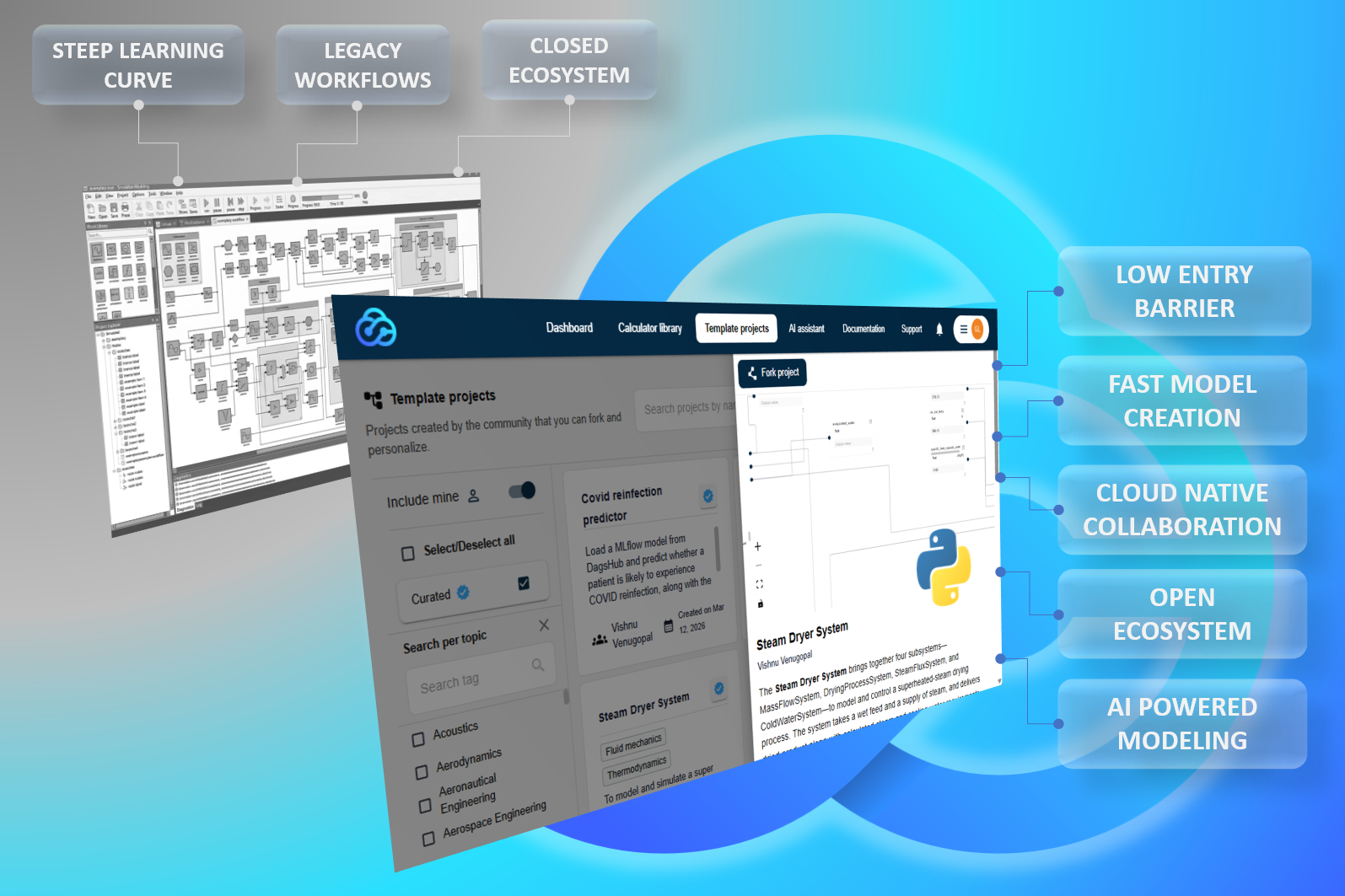
engicloud.ai vs. MATLAB Simulink: A Fair Comparison for Modern Engineering Teams
For decades, MATLAB Simulink has been one of the best-known platforms for modeling, simulating, and analyzing dynamic systems. It has played a major role in engineering, research, and education, and it remains a trusted tool in many organizations today.
At the same time, engineering workflows are changing. Teams increasingly expect cloud collaboration, open ecosystems, faster iteration, AI-assisted workflows, and easier sharing of models and knowledge. As those expectations grow, many engineers are starting to ask a practical question:
What should a modeling platform look like today?
That is where newer platforms such as engicloud.ai come in.
This article offers a fair comparison between engicloud.ai and MATLAB Simulink. The goal is not to dismiss Simulink’s strengths. Instead, it is to explore where traditional desktop-based modeling environments still excel, where they can feel limiting, and why open, AI-powered, cloud-native platforms are becoming increasingly attractive.
MATLAB Simulink: A Proven Standard in Engineering Modeling
Simulink has earned its reputation for a reason. It provides a structured environment for building and simulating systems using block diagrams, and it is backed by the broader MATLAB ecosystem. Over many years, it has developed into a mature platform with deep functionality, strong documentation, and wide adoption in industry and academia.
For many users, Simulink’s biggest strengths include:
- a stable and established environment
- extensive libraries and toolboxes
- strong use cases in control systems and model-based design
- deep integration with MATLAB
- acceptance in enterprise and regulated engineering settings
In sectors such as automotive, aerospace, industrial control, and academic teaching, Simulink continues to be highly relevant.
But tools are always shaped by the era in which they were built. And engineering today increasingly happens in a different context than it did twenty or thirty years ago.
The Shift in Engineering Software
Modern engineering teams often work across multiple tools and disciplines. A typical workflow may involve:
- Python for scientific computing and automation
- Jupyter notebooks for exploration and documentation
- cloud infrastructure for compute and collaboration
- APIs and data pipelines for integration
- AI tools for drafting, translating, checking, or accelerating technical work
In that environment, the question is no longer only whether a platform can simulate a system. It is also whether it can help teams create, reuse, share, verify, and extend engineering knowledge efficiently.
This is where engicloud.ai takes a different approach.
engicloud.ai: An Open, AI-Powered Modeling Platform
engicloud.ai is built around a broader idea than traditional modeling software. It is not just a place to assemble models. It is designed as a platform where engineering knowledge can become structured, executable, reusable, and shareable.
That difference matters.
Where traditional environments often focus on manual model creation inside a closed software stack, engicloud.ai is designed for a world in which engineers want to:
- build models faster
- collaborate in the cloud
- connect to open tools and workflows
- reduce friction for new users
- use AI to accelerate repetitive modeling tasks
- turn isolated scripts and equations into reusable assets
In other words, the comparison is not simply desktop software versus cloud software. It is also about closed workflows versus open workflows, and manual creation versus AI-assisted modeling.
1. Philosophy: Curated Toolbox vs. Open Knowledge Platform
One of the clearest differences between Simulink and engicloud.ai is philosophical.
Simulink offers a highly structured environment with curated libraries and a consistent modeling paradigm. That can be a real advantage, especially in organizations that value standardization and long-established workflows.
engicloud.ai starts from a different premise: that engineering knowledge should not remain locked in individual files, personal scripts, or isolated software environments. Instead, it should be easier to make that knowledge executable, reusable, and accessible across teams.
This makes engicloud.ai feel less like a single-purpose modeling tool and more like a living engineering platform. The emphasis is not only on simulation, but also on how models are created, shared, and evolved over time.
2. Ease of Use: Powerful Workflows vs. Lower Entry Barrier
Simulink is powerful, but it can also feel heavy for new users. In many cases, getting started requires:
- access to MATLAB and the relevant licenses
- familiarity with Simulink’s modeling approach
- time to build models manually
- additional setup depending on the required toolboxes
For experienced users, this may be perfectly acceptable. But for students, startups, smaller teams, or engineers who simply want to move quickly, that entry barrier can slow experimentation.
engicloud.ai is designed to reduce that friction.
Because it is cloud-based and built with usability in mind, users can start more quickly and avoid much of the overhead associated with traditional engineering software. Instead of beginning from a blank page, users can work with guided workflows, reusable components, and AI-assisted model creation.
That changes the experience significantly. The goal is not to replace engineering judgment, but to reduce the amount of setup and repetitive manual work required to get to a useful result.
3. Flexibility and Interoperability: Proprietary Stack vs. Open Ecosystem
Simulink works best inside the MATLAB ecosystem. That is part of its strength, but it can also be a limitation.
Modern engineering rarely happens inside one closed environment. Teams increasingly need to connect models with data pipelines, custom scripts, Python packages, cloud infrastructure, internal tools, or external APIs. While Simulink can interact with some of these systems, it is not naturally centered on that style of workflow.
engicloud.ai is designed with openness in mind.
A platform that is Python-friendly, cloud-native, and integration-oriented fits better into the everyday reality of many modern technical teams. This is especially relevant for engineers and scientists who already use open-source tools and want to avoid unnecessary switching costs between disconnected environments.
For these users, openness is not a nice-to-have. It is a practical requirement.
4. Collaboration and Sharing: Local Files vs. Cloud-First Work
Another major difference lies in collaboration.
Simulink collaboration is possible, but in many cases it still depends on local installations, license availability, enterprise infrastructure, and more traditional file-based workflows. That can work well in established organizations, but it is not always the smoothest experience for distributed or fast-moving teams.
engicloud.ai takes a cloud-first approach. That makes it easier to:
- share work through links
- collaborate across teams
- keep models versioned and reproducible
- turn individual work into shared organizational assets
- publish apps internally or externally
This matters because many teams are not struggling to build one model. They are struggling to ensure that models remain understandable, reusable, and accessible six months later.
That is often less a simulation problem than a knowledge management problem.
5. Model Creation Speed: Manual Assembly vs. AI Assistance
This is one of the most important areas where newer platforms can offer a very different experience.
In Simulink, even with strong libraries, building a model usually involves a substantial amount of manual work: assembling blocks, configuring parameters, structuring subsystems, and understanding the relevant toolbox logic.
That process gives users control, but it also takes time.
engicloud.ai explores a more accelerated workflow by using AI to support model creation and translation of technical knowledge into executable form. For engineers, that can mean a faster path from concept, equation set, or written knowledge to a working model or app.
The broader significance is not just speed. It is leverage.
When AI can help reduce repetitive setup work, engineers can spend more of their time on the parts that matter most: checking assumptions, interpreting results, refining models, and solving real problems.
6. Where the Market Is Heading
There is a broader trend in engineering software that is hard to ignore.
Many younger engineers, research groups, startups, and cross-functional teams increasingly prefer tools that are:
- easier to access
- lighter to adopt
- compatible with Python and open workflows
- collaborative by default
- cloud-based
- supported by AI rather than isolated from it
This does not mean traditional tools disappear overnight. Mature software with deep domain adoption often remains important for years.
But it does suggest that the center of gravity is shifting.
For many modern users, the ideal platform is no longer one that simply offers simulation features. It is one that fits naturally into a broader technical workflow and helps teams move faster without sacrificing rigor.
7. Cost and Accessibility
Licensing is another practical consideration.
Simulink can represent a significant investment, especially when multiple toolboxes are required. For large institutions, this may be manageable. For smaller teams, independent engineers, startups, or growing labs, it can be a barrier.
A more flexible pricing model lowers that threshold and makes experimentation easier. This is one reason why cloud-based platforms with freemium or tiered access models appeal to a wider range of users.
Accessibility matters. Many great ideas never become working models because the tooling is too expensive, too complex, or too hard to access.
8. Which Platform Is the Better Fit?
A fair comparison should acknowledge that the answer depends on the use case.
MATLAB Simulink may be the better choice if you:
- work in an environment with long-established MATLAB workflows
- depend on specialized Simulink toolboxes
- need certification-oriented or highly standardized model-based design processes
- operate in a heavily regulated enterprise setting with deep Simulink infrastructure
engicloud.ai may be the better choice if you:
- want to build and share models more quickly
- prefer cloud-based collaboration
- work in Python-centered or open technical workflows
- want lower entry barriers for yourself or your team
- value reproducibility and reusability
- are interested in AI-assisted engineering workflows
- want a more flexible way to turn engineering knowledge into executable tools
For many modern teams, especially those that care about openness, usability, and speed, platforms like engicloud.ai can offer a compelling alternative.
Simulink’s Legacy and the Opportunity Ahead
Simulink helped shape modern engineering software. It remains an important tool and deserves that respect.
But the future of engineering platforms is likely to be defined by a wider set of expectations: openness, cloud access, AI assistance, collaboration, reusability, and integration across tools and disciplines.
That is the opportunity engicloud.ai is built around.
Rather than asking engineers to adapt to older software assumptions, it asks a more forward-looking question:
How can engineering knowledge become easier to create, execute, share, and improve?
That question matters not only for software teams, but for researchers, scientists, consultancies, and organizations trying to work faster and smarter in an increasingly complex technical world.
Final Thoughts
Comparing engicloud.ai and MATLAB Simulink is not really about declaring a winner in every scenario. Simulink remains strong in many established use cases. But for a growing number of engineers and scientists, the more important issue is whether their platform reflects how technical work happens today.
If your work depends on openness, collaboration, AI assistance, and faster iteration, then newer platforms deserve serious attention.
That is why many teams are beginning to look beyond traditional modeling environments and explore a more open, AI-powered future.
And that is exactly the space engicloud.ai is building for.